ServicesInvisalign / Clear Aligners
Invisalign and Clear Aligners in Westborough
Clear aligners straighten teeth in small, planned steps, one removable tray at a time. We map out each case with care and check the fit and progress as you go. A single person on our team guides you from your first visit through to your retainers.
A quieter way to straighten teeth
Aligners are smooth, clear trays made from medical-grade plastic, each one shaped slightly differently from the last. Worn most of the day, every set nudges certain teeth a small distance. Over months, those small moves add up to a straighter bite and a more even smile.
They suit many cases of crowding, gaps and mild to moderate bite problems in teens and adults. Some situations still call for braces or other treatment first, and we will say so plainly at your consult rather than fit you into aligners that will not do the job.
Our practice has been caring for patients for over 11 years. Through every stage of aligner treatment you deal with one coordinator who knows your case, answers your questions and keeps your visits, trays and insurance paperwork in order.
What your aligner treatment includes
Exam and records
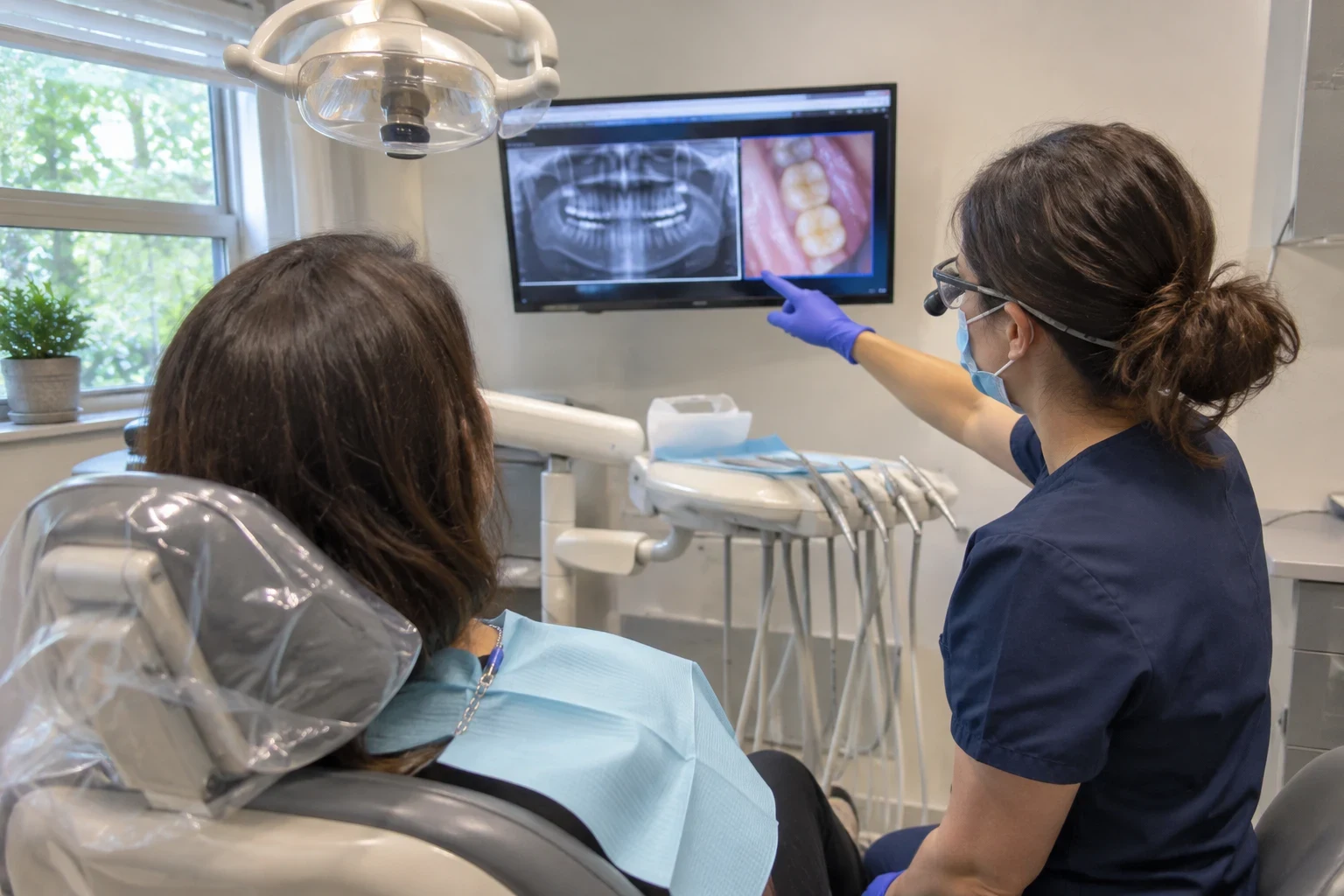
Treatment begins with an exam, X-rays and a digital scan or impressions. Any cavities or gum concerns are handled first, since teeth move most predictably when they are healthy.
A plan you can preview
Before anything is ordered, you see how your teeth are expected to shift from one set to the next. We cover how many trays you will wear, how long each stays in and where small tooth-colored grips may be added to help the trays hold on.
Your first fitting
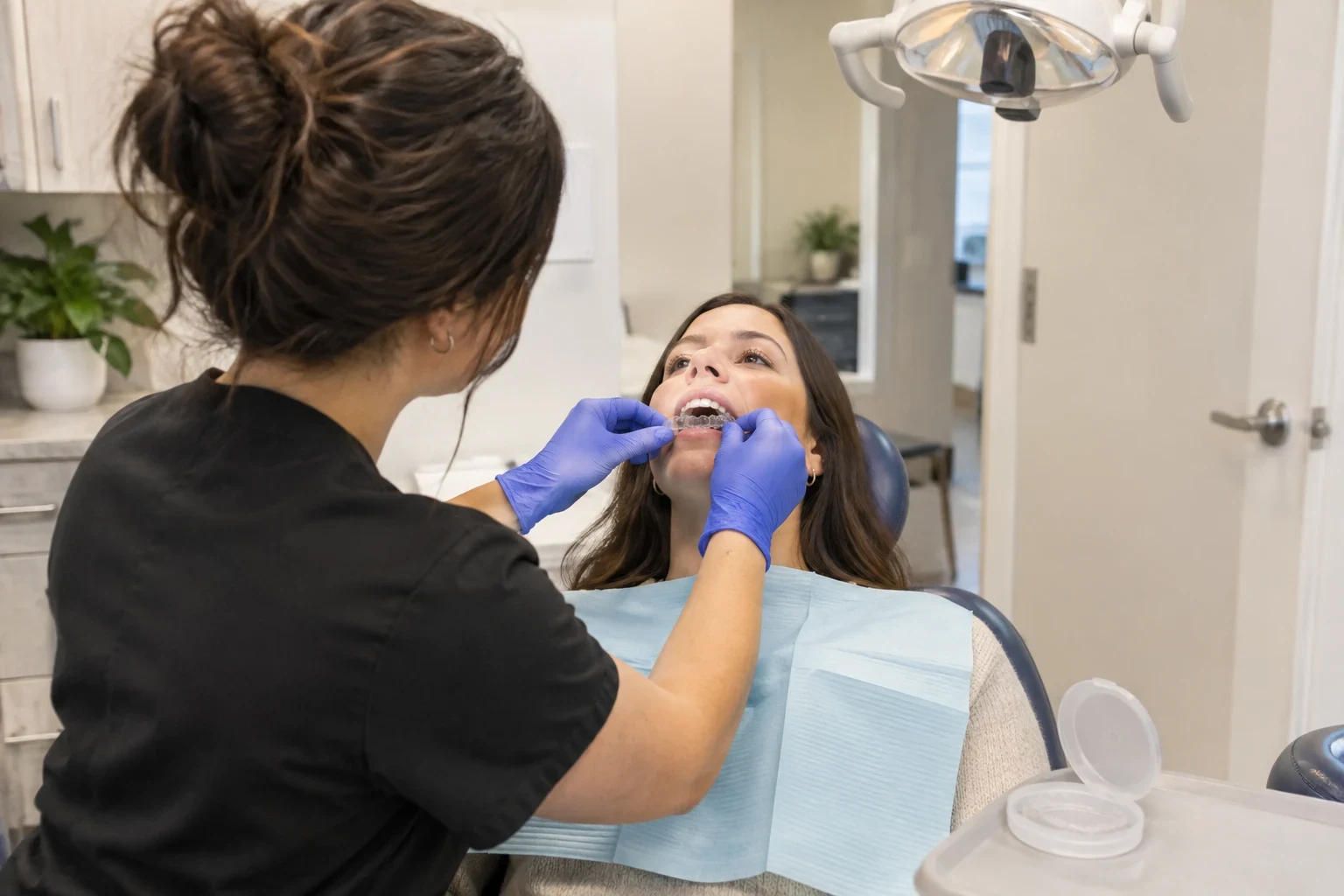
We place any grips, confirm the first trays sit fully on your teeth and coach you on slipping them on and off gently so the edges stay true.
Progress visits
Every several weeks we compare your teeth with the plan. When one tooth falls behind, we correct course early rather than at the finish.
Refinements and retainers
Plenty of cases end with a brief set of refinement trays. Then retainers keep your new alignment in place, and we explain exactly how and when to wear them.
When clear aligners make sense
- Teeth that crowd together
- Where teeth overlap, plaque collects and floss struggles to reach. Lining them up makes everyday cleaning simpler.
- Spaces you notice
- Gaps between the front teeth often close nicely with aligners, particularly when the gums are in good shape.
- Movement after old braces
- Teeth tend to drift once a retainer is set aside for years. Aligners are a common way to bring them back into line.
- A bite that feels uneven
- Worn spots, chipped edges or a tired jaw can signal a bite issue. Some bite problems respond well to aligners, and your exam shows which ones.
- You prefer a low-profile option
- Clear trays are hard to spot when you talk, and they come out for meals, brushing and flossing.
How treatment unfolds
- 1
The consult
We examine your teeth, gather records and listen to what you would like to change. By the end you know if aligners fit your case and what other routes exist.
- 2
Planning and approval
We prepare your plan and go over each tooth movement with you. Your coordinator reviews the cost, likely insurance coverage and payment choices before any trays are ordered.
- 3
Fitting day
Small grips are attached to select teeth, your first trays are fitted and you practice taking them in and out. A new set usually feels tight at first, and that snugness settles within a short while as teeth adjust.
- 4
Daily wear and check-ins
Trays stay in roughly 20 to 22 hours a day, and you change to each new set on the schedule we give you. Regular progress visits keep everything on course.
- 5
Finishing well
When your teeth reach their planned spots, we polish away the grips and retainers take over. Your coordinator lines up retainer checks alongside your routine exams and cleanings.
What shapes the cost of aligners
Your aligner fee tracks how far your teeth need to travel and how long the trip takes. Before a single tray is ordered, your coordinator sits down with you and goes through the full cost in writing, item by item. We accept most dental insurance plans, and because some plans include an orthodontic benefit, we can help you find out what yours covers.
- How much needs to move
- A single small gap may need only a short series of trays. Crowding combined with a bite correction takes many more sets and more check-ins, and the fee reflects that.
- Care before movement
- If a cavity or gum issue needs attention first, that work is priced on its own and explained before we begin.
- Refinements and retainers
- We spell out which refinement trays and retainers are part of your fee, and what a replacement retainer would cost down the road.
- Covering the fee
- For patients who have no dental insurance, our Office Dental Plan is available. If spreading the cost into smaller amounts over the months of treatment suits you better, the CareCredit Patient Payment Plan is another route.
Clear aligner questions
- How long does aligner treatment take?
- That depends on what we are correcting. Closing minor spacing may wrap up in several months, while crowding plus a bite change often runs a year or more. We give you a realistic timeline at the consult, and each progress visit shows if your teeth are keeping pace.
- Will aligners be uncomfortable?
- Expect a snug, tight feeling when a new set goes in, usually fading after a day or so. Many patients change trays right before bed so the snuggest stretch passes while they sleep. Trays have smooth edges and no wires, so there is nothing to scrape your cheeks.
- Can my teenager wear aligners?
- Often, yes, once most of the permanent teeth have come in. Aligners only work when they are worn as directed, so we talk openly with you and your teen about that daily commitment. For younger children, waiting or a different approach may be better, and our Kids' Dentistry page covers that care.
- Who will I deal with during treatment?
- One coordinator stays with your case from consult to retainers. A cracked tray, a schedule change or an insurance question all go to that same person, who works it out with the dentist. Our dentist is board certified and reviews every aligner plan before it is ordered.
- What should I do if I lose a tray?
- Phone the office and let your coordinator know which set you were wearing. Most often we ask you to step forward to the next set or back to the last one while a new tray is arranged. Hold on to your previous trays in their case so this is easy.
Start with a conversation about your smile
Your aligner consult tells you whether clear trays fit your case, how long treatment may take and what it costs. From then on, one person keeps the details in order for you.