ServicesCrowns & Bridges
Crowns and Bridges in Westborough
A cracked tooth, a filling that has grown too large or a gap from a lost tooth can all be restored with a crown or bridge. We plan the work with you, match the shade carefully and check your bite until it feels like your own.
Is a crown or bridge the right choice
A crown is a custom cap for a tooth that no longer has enough of its own structure to stand up to chewing. It covers the tooth down to the gumline and holds it together, so you can bite on that side again without fear of it breaking. A bridge replaces one or more missing teeth by anchoring an artificial tooth to crowns on the teeth at each side of the space.
Not every worn or chipped tooth needs this much. If a filling will do the job, we tell you, and our fillings page covers that route. A crown becomes our recommendation when the walls of the tooth are too thin to hold a filling, or when a crack runs deep enough that the tooth needs support from the outside.
From the first visit on, one member of our team is your point of contact. That person reviews the treatment plan with you, handles insurance and scheduling questions, and tracks your case with the dental lab, so you only tell your story once.
What your crown or bridge care covers
X-rays and a careful look first
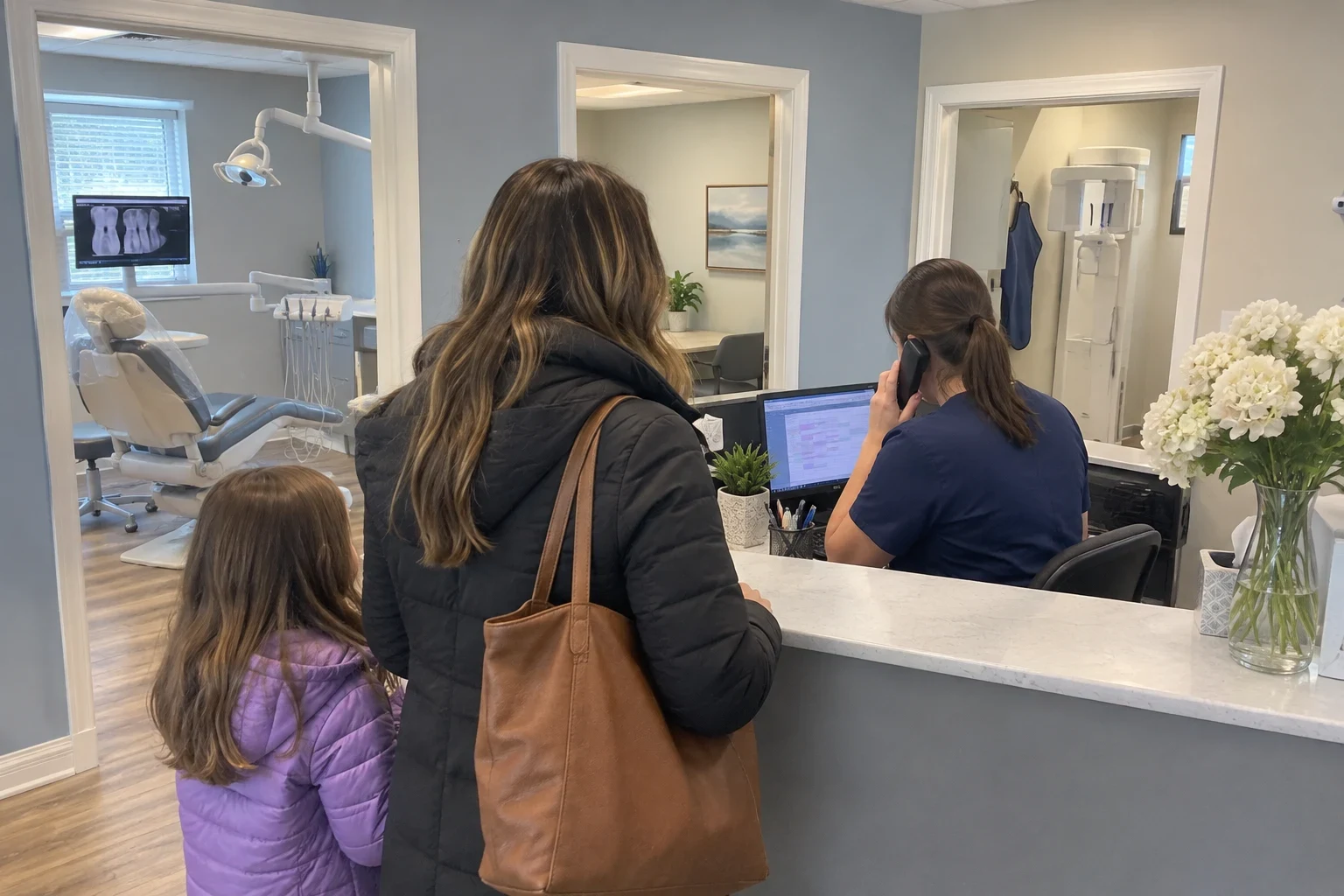
Before we suggest anything, we study the tooth itself, its root and the surrounding bone. The images are on the screen in front of you, and we explain what each one shows.
A material suited to the tooth
For front teeth, all-ceramic options such as lithium disilicate handle light in a way close to natural enamel. Molars do most of the heavy chewing, so zirconia or a metal-based crown often holds up better there. We lay out the tradeoffs simply so you can choose.
Careful color and contour work
We take the shade in natural light and record the fine features of the teeth nearby, such as a slightly clear biting edge or soft surface ridges, so the lab can copy them.
A temporary you can live with
While the lab builds your final crown or bridge, a temporary covers the prepared tooth so you can eat and smile without fuss.
Fitting and bite checks
We inspect the edge where crown and tooth meet, make sure floss slides through cleanly and refine the bite until no spot feels high when you close.
When to ask us about a crown or bridge
A twinge as you let go of a bite
A sharp jolt the moment you release a bite is a common sign of a cracked tooth. Covering it with a crown can keep the crack from spreading further.
A filling that takes up most of the tooth
Big silver or tooth-colored fillings often leave only thin walls of natural tooth, and those walls can snap off over time.
A back tooth with a past root canal
Molars and premolars that have had a root canal often turn brittle, and most need a crown to keep working.
An open space where a tooth used to be
Teeth next to a gap tend to tip and drift into it, which can throw off how you bite. A bridge closes the space and holds them steady.
An older crown that has darkened or shifts
A gray edge near the gum or a crown that wiggles can mean decay has started beneath it or the seal has broken down.
How the visits unfold
- 1
Consultation and plan
We examine the tooth, take X-rays and go over your options, including whether a crown is truly needed. You leave with a written treatment plan and the name of the person coordinating it.
- 2
Preparation visit
After numbing the area, we gently shape the tooth, take a precise impression and select the shade. You go home with a temporary crown or bridge.
- 3
Lab fabrication
A dental lab crafts your restoration to our specifications. Your contact keeps an eye on the timeline and calls you to set the fitting.
- 4
Fitting and bonding
We remove the temporary, try in the permanent piece, check fit, color and bite, then bond it in place. We show you how to clean around it, especially under a bridge.
What moves the price of a crown or bridge
Every tooth arrives with its own history, so we price your treatment only after we have examined it, and every line is written down before any work begins. Most dental insurance plans are accepted here. Patients without coverage can use our Office Dental Plan, and the CareCredit Patient Payment Plan is another way to spread out the cost. Your contact can go over what your benefits will likely pay before you commit.
- One tooth or several connected
- A single crown covers one tooth. A bridge is usually three joined units: a crown on each tooth beside the gap and a replacement tooth suspended between them. Each added unit means more time in the chair and more work at the lab.
- Material choice
- Lab fees differ between all-ceramic, zirconia and metal-based restorations. Each has a place in the mouth where it performs best, and we explain why we lean toward one for your tooth.
- What we find beneath old work
- Removing an aging filling or crown sometimes reveals decay, or too little tooth left to anchor a new crown. A core buildup may be needed first, and you see the photos and our reasoning before it goes into the plan.
- The shape of your benefits
- Coverage for major restorative care varies widely between plans. If you are close to your annual maximum, spacing treatment over two benefit years can sometimes lower what you pay out of pocket.
Crown and bridge questions we hear often
Something not covered here? (508) 466-0049
Does getting a crown hurt?
The tooth is fully numb before we start shaping it. Patients usually describe feeling some pressure and a buzzing sensation rather than pain. Afterward, mild soreness or sensitivity to hot and cold for a few days is normal and tends to settle by itself. We keep an unhurried pace and stop any time you raise a hand.
How long will a crown last?
That depends on the material, the way your upper and lower teeth come together, any clenching or grinding, and your daily cleaning around the crown. Routine exams and cleanings let us catch wear or a weakening margin before it becomes a problem. We prefer to give you an honest answer over quoting a fixed lifespan.
Will people be able to tell it is a crown?
We aim for a crown that blends in. The shade and surface texture are matched to the neighboring teeth, and all-ceramic materials let light through much as natural enamel does, which keeps a front tooth from looking flat.
Who does the treatment?
Your care is provided by our board certified dentist, who has been in practice over 11 years. Every stage, from planning to preparation to the final fitting, takes place in our office, and a single person on our team keeps your treatment on track.
What should I avoid with a temporary crown?
You can eat most foods with a little care. Chew sticky or very hard foods on the opposite side, and slide floss out sideways rather than lifting it up through the contact. If the temporary comes loose or falls off, give us a call and we will schedule a visit to reseat it.
Ready to talk about your tooth
Tell us what you are noticing and we will set up a visit to examine it. Your contact will be there from the first X-ray to the final bite check.