ServicesExtractions
Tooth Extractions in Westborough
A tooth that has split past repair, decayed too deep for a filling or is pushing others out of line can keep hurting until it comes out. We work slowly, numb carefully and keep one person on your case from the first call to the healing check.
Knowing when a tooth should come out
Our first instinct is to keep a natural tooth. Often a filling or a crown will do the job better, and if so, we say that plainly. Removal becomes the better option when damage extends below the gumline, when a root has fractured, or when infection has left too little healthy structure to support a restoration.
Some extractions are scheduled well in advance, like a stubborn baby tooth or a tooth taken out to create space before clear aligner treatment. Others begin with an ache that has been building for weeks. In every case you get an exam, an X-ray and a clear explanation of the choices before anything is decided.
One member of our team is your contact the whole way through. That person answers questions, works out insurance details, books the visit and follows up afterward, so you tell your story once.
What your extraction visit includes
Exam and X-ray first
Before planning anything, we study the root shape, the surrounding bone and the position of nearby nerves. The image shows whether the tooth can come out whole or should be removed in sections.
Careful numbing
A topical gel goes on before the local anesthetic, and we give it time to take full effect. What you notice is pressure rather than sharp pain. Raise a hand and we pause.
Gentle removal
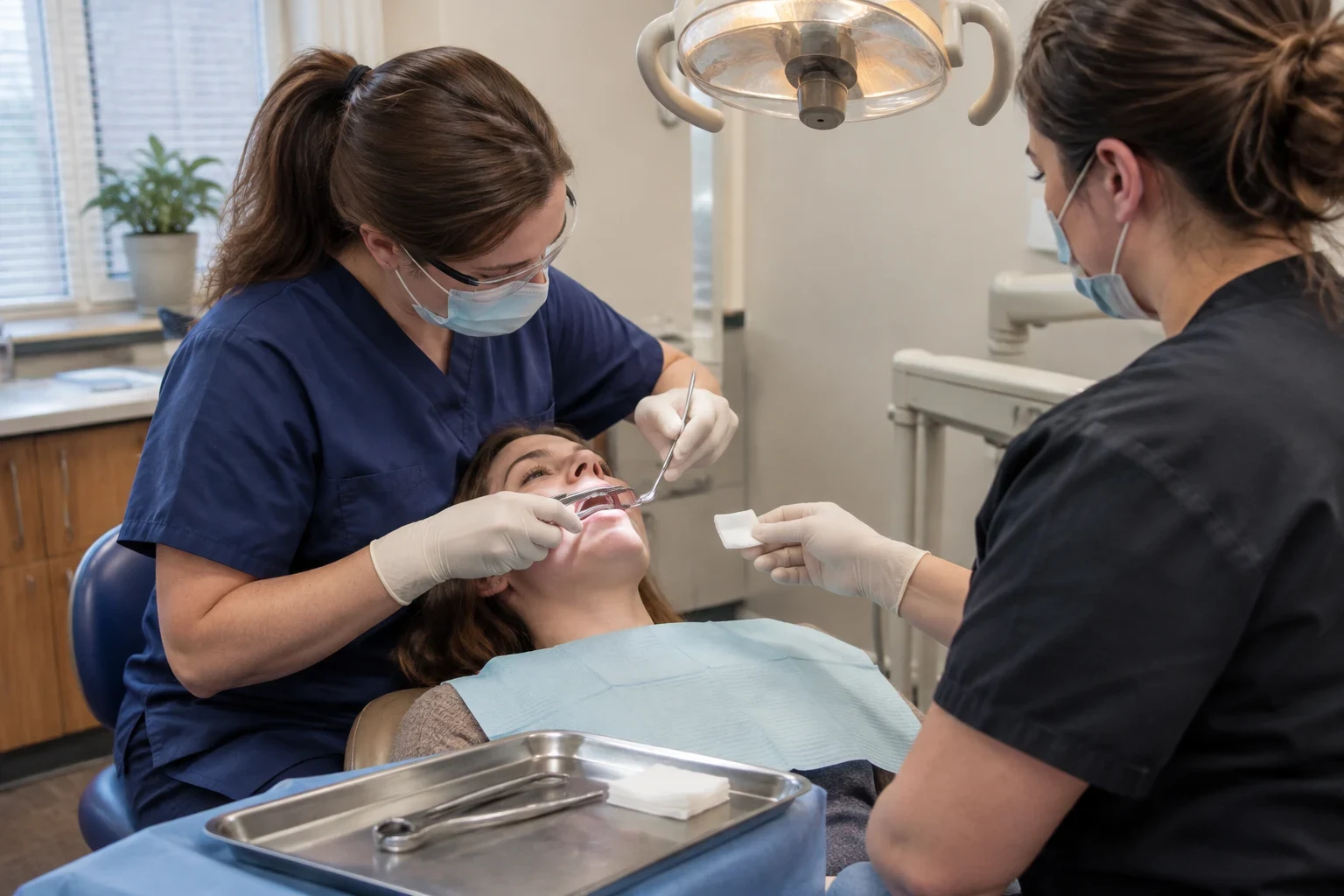
Fine instruments ease the tooth loose a little at a time instead of relying on force, which spares the bone and gum around it. A tooth with curved or brittle roots may be divided so each piece lifts free cleanly.
Socket care
We clean the site, place gauze, and add a stitch only when the opening calls for one. A stable clot is what lets the area heal well.
Written aftercare
You go home with plain instructions on bleeding, swelling, eating and cleaning, plus a direct line to your contact if something feels wrong.
A plan for the gap
If the space should be filled later, we go over options such as a bridge, covered on our Crowns & Bridges page, so the choice is never rushed.
When a tooth is ready to come out
Fracture reaching the root
Once a split travels into the root, a crown has nothing solid to seal. Biting pain that flares and fades is a frequent hint.
Decay with little tooth left
Without enough sound structure to anchor a filling or crown, removal can be the cleaner, more lasting answer.
A bump or swelling on the gum
A small pimple-like spot beside a tooth often points to infection. Have it examined soon, even if the discomfort is mild.
An adult tooth that moves
Advanced gum disease can wear away the bone a tooth needs to stay in place.
A baby tooth holding on too long
When the permanent tooth is erupting behind or beside it, taking out the baby tooth clears the way. Our Kids' Dentistry page explains more.
How the appointment runs
- 1
Your first call
Describe what's bothering you and which insurance plan you have, if any. We book the exam and tell you what to bring.
- 2
Exam and honest options
We take an X-ray, show you what it reveals, and explain whether the tooth can be saved. If removal is the right choice, you receive a written treatment plan with costs listed.
- 3
The extraction
Most simple extractions take well under an hour, numbing time included. Expect soft foods and a quiet evening afterward.
- 4
Follow-up
Your contact checks in over the first few days and sets up a short healing visit if one is needed. Questions go to someone who has known your case from day one.
What affects the cost of an extraction
Once the exam is done, and before any treatment starts, you receive a written estimate. The total depends on the tooth itself and on what the X-ray shows beneath the gum. We work with most dental insurance plans. If you have no coverage, our Office Dental Plan is one option, and the CareCredit Patient Payment Plan lets you pay over time.
- Simple or sectioned
- A fully erupted tooth with straight roots comes out more quickly than one that has to be divided or sits partly under the gum.
- Root shape and position
- Curved, long or fused roots, and teeth close to the sinus or a nerve, call for more time and care.
- Infection present
- An active infection sometimes needs to calm down first, which can mean an extra visit or a prescription.
- Replacing the tooth
- Choosing a bridge afterward is a separate step in the plan, with its own estimate.
- Your coverage
- Benefits vary from plan to plan. We can look over yours before the visit so you know your share ahead of time.
Extraction questions we hear often
Something not covered here? (508) 466-0049
Will it hurt?
You will feel pressure and some pushing, but not sharp pain. We wait until the area is fully numb before starting, and we pause whenever you signal. Most patients manage the soreness afterward comfortably with the over-the-counter medicine we recommend.
Who will be doing my extraction?
The same dentist who examines your tooth performs the removal. Our dentist holds board certification and has been in practice over 11 years. When an X-ray points to a case that belongs with an oral surgeon, such as a deeply impacted tooth, we say so plainly and help set up the referral.
How long is recovery?
Most people feel close to normal within a few days. The gum usually closes over the following couple of weeks, while the bone underneath keeps healing longer. Avoid straws, smoking and hard foods for the first several days to protect the clot.
How do I lower the risk of dry socket?
Dry socket happens when the clot dislodges too soon and leaves bone exposed, causing a deep, throbbing ache. Following the aftercare sheet closely, especially skipping straws and forceful spitting, lowers the risk a great deal. If the pain gets worse after the second or third day, call us so we can check the site.
Do I have to replace the tooth?
Not always. A back molar with no opposing tooth, or a crowded tooth removed for orthodontics, may be fine left as a space. When a gap would let nearby teeth drift or change your bite, we walk through the options and leave the decision with you.
Can I get back to work the next day?
After a simple extraction, most patients return to a desk job the next day. If your work is physical, plan on a day or two of lighter duty. We will give you a realistic estimate for your particular tooth.
Let's take a look at that tooth
We see patients from Westborough, Shrewsbury, Grafton, Northborough and the surrounding area. A single phone call sets up your appointment, and the same person stays with you through healing.