ServicesFillings
Tooth-Colored Fillings in Westborough
A small cavity caught early is a short, comfortable visit. We remove the decay, rebuild the tooth with composite matched to your shade, and check your bite before you leave. One person on our team handles your questions and scheduling from the first call to the follow-up.
When a filling is the right repair
A filling fits when decay or damage is limited to part of a tooth. The aim is simple: clean out what is soft or broken, keep every bit of healthy enamel we can, and seal the tooth so bacteria cannot work their way back in.
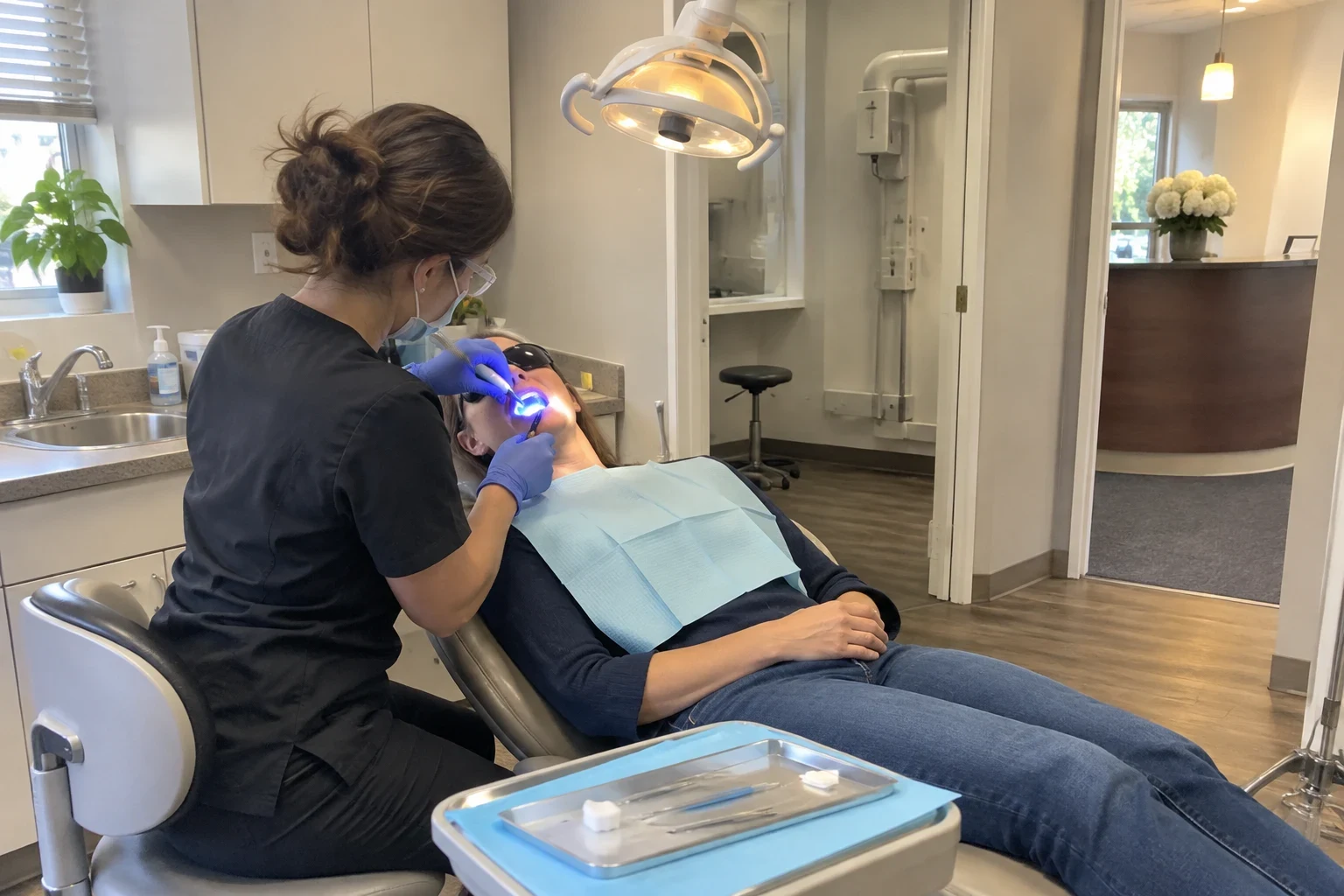
We use composite resin, a tooth-colored material that bonds directly to enamel and dentin. Because it bonds rather than wedges in place, we usually remove less healthy tooth than older techniques required. It is placed in thin layers, hardened with a curing light, then shaped and polished so it reads as part of your smile.
If a tooth has lost too much structure for a filling to hold up, we will say so plainly and talk through a crown instead. You hear the honest answer before any work begins.
What your filling visit includes
- Exam and X-rays of the tooth
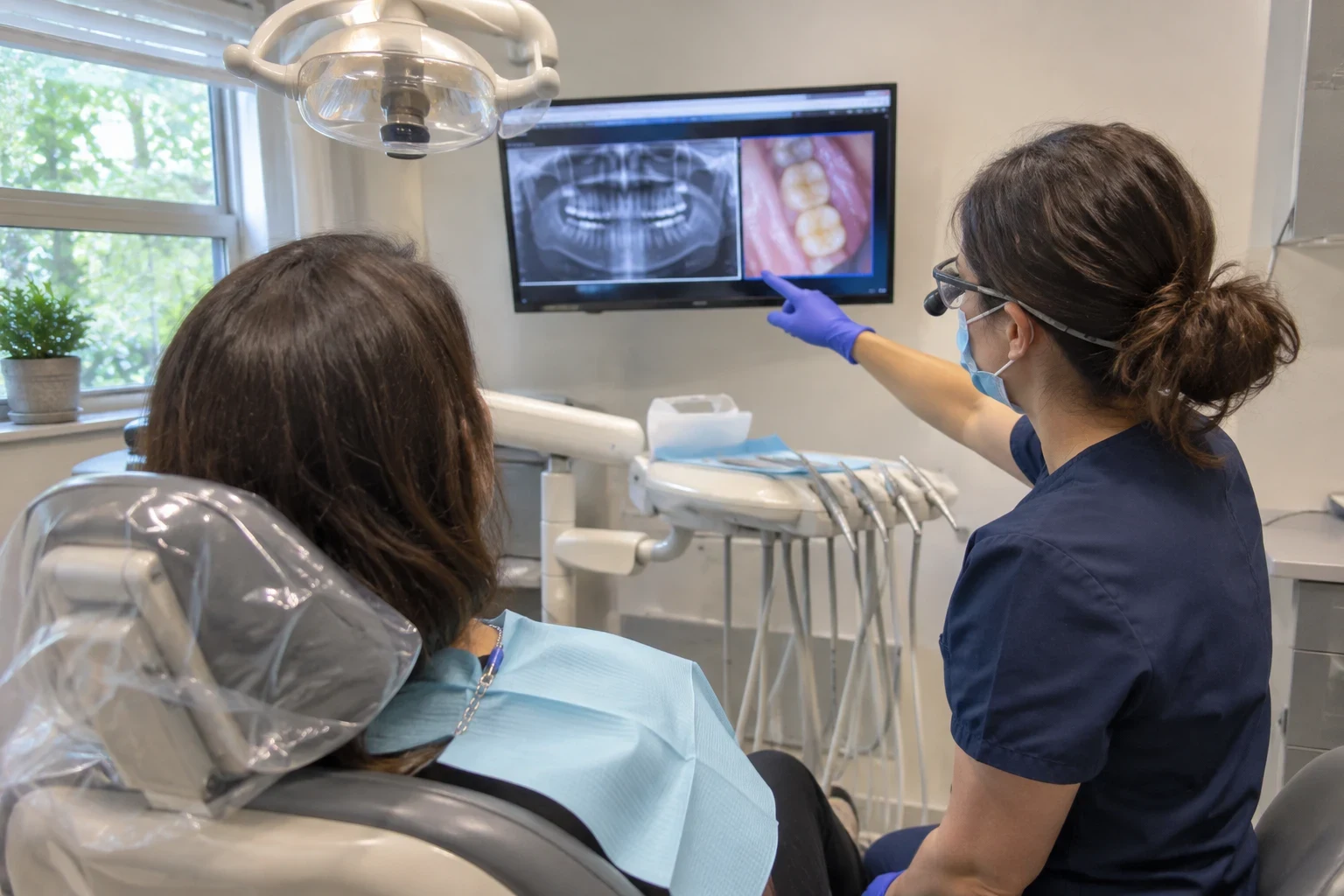
- We check the tooth by eye and on X-ray to judge how far the decay reaches. That shows whether a filling will do the job, and we walk you through the images.
- Numbing done slowly
- A numbing gel is applied first, followed by local anesthetic given at an unhurried pace. We start only once the area feels fully numb to you.
- Shade matching
- Before anything is placed, we hold composite shades beside your tooth in natural light and choose the closest match so the result blends in.
- Built up in small increments
- We add the composite a little at a time and set each portion with a curing light before the next. Working in small amounts keeps shrinkage low and helps the edges close snugly against the tooth.
- Bite check and polish
- Marking paper shows us where your teeth touch, and we smooth away any spot that sits too high. A final polish leaves the surface smooth and natural to the tongue.
- Replacing worn older fillings
- Aging silver or cracked fillings can let bacteria in along their edges. When one has to go, we take it out with care and restore the tooth in tooth-colored composite.
When a tooth is telling you something
Sharp sensitivity to cold or sugar
A quick zing from iced drinks or candy often means the enamel has thinned, exposing the softer layer beneath.
Food catching in one spot
Floss that frays or food that keeps wedging between the same two teeth can signal a cavity or a chipped edge.
A dark spot or rough edge
Brown or gray patches, or a ridge your tongue keeps returning to, deserve a look even before anything hurts.
An old filling that has changed
Cracks, dark lines around the edge, or a section that feels missing usually mean the seal has given way.
Pain when biting down
Discomfort while chewing can come from decay, a cracked tooth or a filling that sits too high. Each calls for a different fix, so an exam tells us which one you have.
How the appointment runs
- 1
Your first call
You speak with the person who will coordinate your care. They book the visit, note any worries about numbing or timing, and go over your insurance or the Office Dental Plan.
- 2
Diagnosis and a clear plan
The dentist examines the tooth, shows you the X-ray and explains the treatment plan and its cost before starting.
- 3
The filling itself
Most single fillings take under an hour. We numb the area, remove the decay, place and cure the composite, then shape it to your bite.
- 4
Afterward
Numbness fades over a few hours. Composite is fully hardened when you leave, so you can eat once feeling returns. Your coordinator stays your contact if anything feels off.
What affects the cost of a filling
Your fee depends on which tooth needs work and how large the repair is, and we go over it with you before anything starts. We accept most dental insurance plans. Patients without coverage can join our Office Dental Plan, and the CareCredit Patient Payment Plan offers another way to manage the cost.
- Number of surfaces
- Decay on a single surface takes a smaller filling than decay that wraps around two or three sides of the same tooth, so the fee is lower.
- Tooth location
- Molars at the back are harder to reach and need more material than front teeth. That extra time and material shows up in the fee.
- Replacing an existing filling
- Taking out an old filling is an added step. Once it is out, we sometimes find decay beneath it that has to be cleaned before the new filling goes in.
- Your coverage
- Plans differ in how they pay for tooth-colored material on back teeth. Your coordinator looks up your benefits ahead of time so you know your share.
Questions about fillings
Something not covered here? (508) 466-0049
Will getting a filling hurt?
Once the tooth is numb, most patients notice pressure and a light buzzing, not pain. We give the anesthetic gradually and test the area before we begin. Lift your hand at any point and we pause right away.
How long do tooth-colored fillings last?
That depends on the size of the filling, its position in your mouth and habits such as clenching or grinding. Small fillings on well-kept teeth generally hold up longest. We look over each filling at your routine exams and cleanings, so early wear does not go unnoticed.
Should I replace my old silver fillings?
Not as a rule. An old filling that is whole and still sealed is often best left alone. We recommend replacing one only when it shows cracks, gaps along the edge or decay underneath, and we point out exactly where on your X-rays before you decide.
Who is doing the work?
Your filling is placed by our board certified dentist, who has been in practice over 11 years. A single member of our team coordinates your visit, so your questions always go to the same person.
My tooth is sensitive after the filling. Is that normal?
A few days of mild sensitivity to cold is common, more so after a deeper filling. If it is getting stronger rather than fading, or your bite feels off, phone your coordinator. We will bring you back to check the tooth and smooth the bite.
Take care of the cavity while it is small
Patients come to us from Westborough, Shrewsbury, Grafton and Northborough. One phone call gets you an appointment and a single contact for the whole visit.